


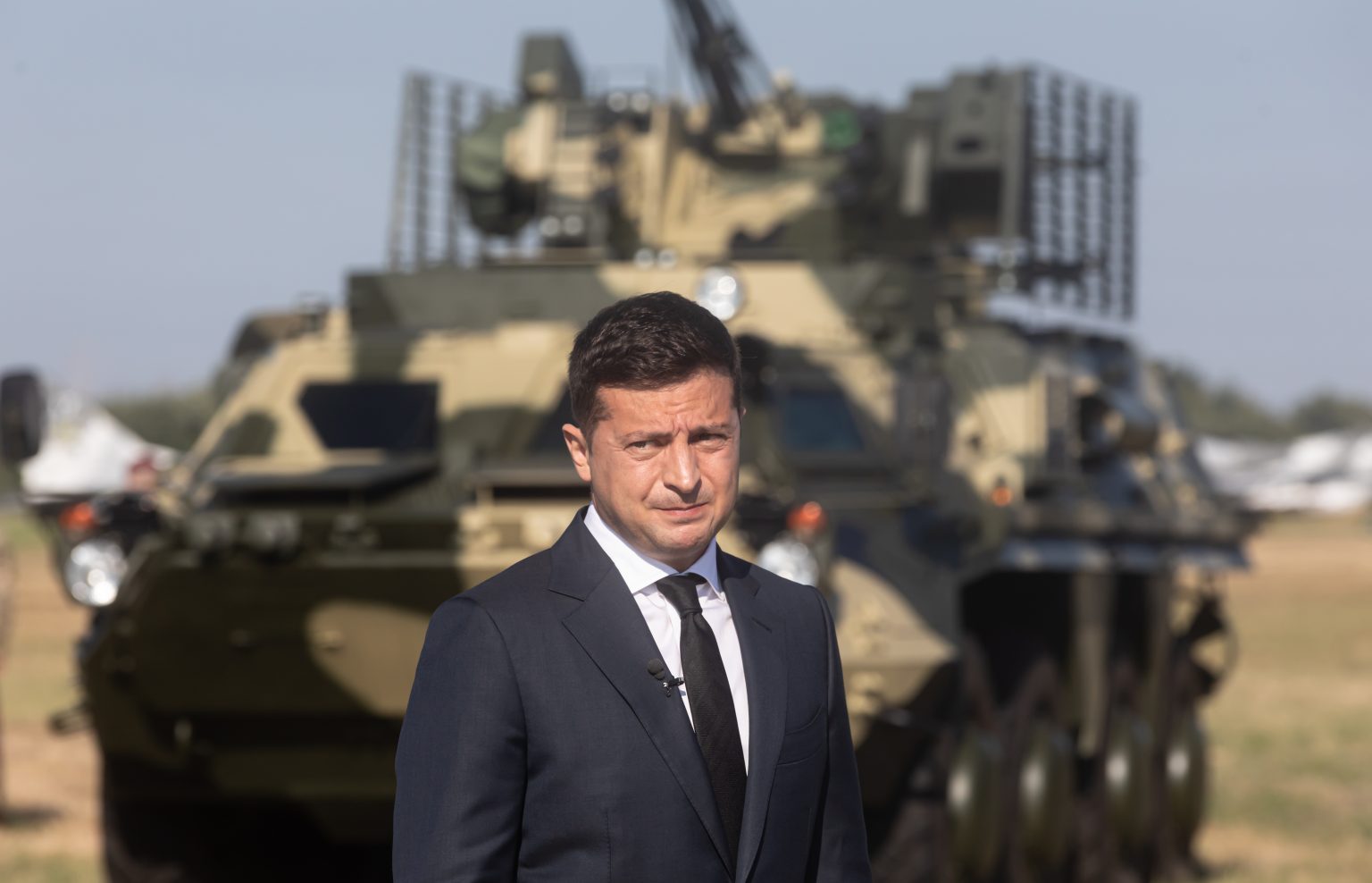


As Russian missiles continue to strike Ukrainian cities and air defence crews struggle to keep pace with increasingly complex attacks, a quiet but important shift is taking place inside NATO. Rather than debating whether the United States should continue to carry the greatest burden of supporting Ukraine, European allies are beginning to build a new model in which they finance much of the military assistance while the United States provides the advanced weapons that Europe still cannot produce in sufficient numbers.
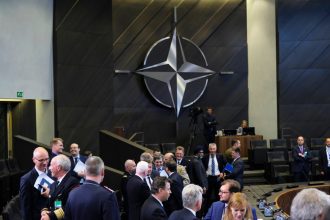
At the centre of this effort is the Prioritised Ukraine Requirements List, better known as PURL. Although it has attracted far less public attention than headline grabbing announcements of new weapons packages or summit declarations, the mechanism is emerging as one of the Alliance’s most significant tools for sustaining Ukraine’s war effort. It also reflects a broader transformation within NATO as Europe prepares for a future in which Washington expects its allies to shoulder much greater responsibility for European security.
The debate surrounding PURL comes at a decisive moment. Russia has intensified long range missile and drone attacks against Ukrainian infrastructure, while Kyiv continues to warn that its most urgent requirement remains additional air defence systems, interceptor missiles and ammunition. At the same time, European governments face growing pressure to demonstrate that they are capable of maintaining support even as American policy becomes less predictable.
PURL was created after the United States reduced direct military assistance under the administration of President Donald Trump. Rather than replacing American support entirely, the initiative was designed to create a more balanced system. Ukraine identifies its highest priority military needs, NATO coordinates the procurement process, participating European countries and partners provide the funding, and American defence companies manufacture and deliver the equipment.
The arrangement is particularly important because Europe still lacks sufficient industrial capacity to produce many of the sophisticated systems that Ukraine urgently requires. Patriot air defence batteries remain the clearest example. European manufacturers have expanded production of artillery shells, armoured vehicles and drones, but advanced missile defence remains an area where American technology continues to dominate. By allowing European governments to finance purchases from United States industry, PURL helps bridge a capability gap that could otherwise leave Ukraine exposed.
According to official NATO statements, more than two dozen countries have already joined the programme and allies have committed more than six billion dollars to fund weapons deliveries. Several deliveries have already begun, demonstrating that the mechanism has moved beyond political declarations and into practical implementation.
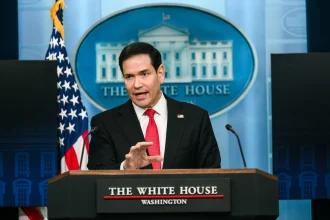
The initiative also reflects changing political realities across the Atlantic. For years Washington argued that European governments relied too heavily on American taxpayers to defend the continent. While those complaints were voiced by several administrations, they became far more prominent during President Trump’s return to office. His administration has repeatedly insisted that European countries must finance a much larger share of both NATO’s collective defence and military support for Ukraine.
Rather than creating confrontation inside the Alliance, PURL offers a compromise. European governments increase their financial contributions while the United States maintains an important role through its defence industry and technological leadership. Defence experts increasingly describe the initiative as an example of burden sharing that allows both sides of the Atlantic to contribute according to their comparative strengths.
A Test of European Resolve
Despite its growing importance, PURL remains incomplete. According to analysis by defence specialists, six NATO members have yet to participate. France, Italy, Turkey, Czechia, Hungary and Slovakia have not contributed funding through the programme, although their broader policies towards Ukraine differ considerably.
France and Italy already provide military assistance through other channels and have consistently supported European security initiatives. Security analysts therefore argue that they could relatively easily join the programme if political agreement is reached. Their participation would strengthen both the financial resources available to Ukraine and the political message that Europe is prepared to assume greater responsibility.
Czechia occupies a different position. Prague has earned international recognition for coordinating artillery ammunition supplies to Ukraine through separate multinational initiatives. Although it has not yet joined PURL, officials have indicated interest in examining possible participation. Given the country’s active support for Ukraine, observers regard Czech involvement as a realistic possibility.
Hungary and Slovakia present greater challenges. Both governments have maintained more cautious positions towards military assistance and have frequently called for negotiations with Moscow. Hungary in particular has repeatedly opposed several European Union initiatives related to military support, arguing that continued arms deliveries risk prolonging the conflict. Those political differences make participation through PURL less certain.
Turkey represents another special case. As both a NATO member and one of the few countries maintaining regular communication with both Kyiv and Moscow, Ankara has attempted to balance support for Ukraine’s territorial integrity with its role as a diplomatic intermediary. Turkish officials have continued supplying military equipment in certain areas while simultaneously pursuing mediation efforts. Some analysts believe that joining PURL could complicate that carefully managed position, although others argue that increased support for Ukraine would not necessarily undermine Turkey’s diplomatic channels.
The uneven participation highlights one of NATO’s enduring characteristics. The Alliance rarely moves with complete unanimity on military assistance. Different governments face different domestic political pressures, economic constraints and strategic calculations. Yet NATO has repeatedly demonstrated that cooperation among willing members can still produce meaningful results even without complete participation.
Beyond immediate military needs, PURL also carries important economic implications. The programme supports American defence production while allowing European governments to meet urgent operational requirements without waiting years for domestic industrial expansion. At the same time, European leaders continue investing heavily in their own defence industries with the aim of reducing future dependence on external suppliers.
This dual track reflects the reality facing European security planners. Building new missile factories, expanding production lines and developing advanced technologies cannot be achieved overnight. Ukraine, however, requires weapons immediately. Purchasing American systems through European financing therefore serves as a practical bridge while Europe’s own industrial base continues to expand.
Beyond Burden Sharing
The significance of PURL extends beyond military procurement. It represents an important evolution in the political relationship between Europe and the United States. For decades NATO depended upon overwhelming American military leadership. That model is now gradually changing as European governments increase defence spending, strengthen industrial production and assume larger operational responsibilities.
The shift has accelerated since Russia’s full scale invasion of Ukraine. European governments have approved record defence budgets, launched joint procurement projects and committed themselves to rebuilding military capabilities that had declined after the Cold War. PURL fits naturally within this broader transformation by encouraging Europe to finance more of its own security while preserving close transatlantic cooperation.
For Ukraine, the programme offers greater predictability. One of Kyiv’s greatest challenges has been uncertainty surrounding future military assistance. Political debates in donor countries have occasionally delayed weapons deliveries at critical moments. A structured procurement mechanism coordinated through NATO provides a more stable framework for long term planning, particularly for expensive systems that require lengthy production schedules.
There are also strategic benefits for the Alliance itself. Russia has closely monitored Western political divisions throughout the war, often hoping that declining public support or disagreements between allies would weaken assistance to Ukraine. A coordinated financing mechanism involving a growing number of European governments sends a different message. It suggests that although the form of Western support may evolve, the commitment itself remains durable.
Challenges nevertheless remain substantial. Demand for advanced air defence systems far exceeds available production. Patriot batteries cannot be manufactured quickly, while interceptor missiles remain expensive and technically demanding to produce. Even with increased European funding, industrial capacity will continue to limit the pace of deliveries over the coming months.
Political uncertainty also persists. Elections across Europe, changing government priorities and continued debate within the United States could all influence future commitments. Maintaining momentum will require sustained political agreement as well as continued investment in defence production on both sides of the Atlantic.
Yet PURL demonstrates that NATO is adapting to a changing strategic environment rather than simply reacting to events. Instead of relying upon emergency assistance packages negotiated one crisis at a time, the Alliance is gradually developing more structured mechanisms capable of supporting Ukraine over the long term.
That evolution may ultimately become one of the lasting legacies of the war. As Europe accepts greater financial responsibility while the United States continues providing critical industrial capacity and advanced technology, NATO is moving towards a more balanced model of burden sharing. If additional allies choose to participate, PURL could become more than a procurement programme. It could emerge as a blueprint for how the transatlantic alliance manages collective security in an era where Europe is expected to contribute not only political solidarity but also the financial and military resources needed to defend the continent.