


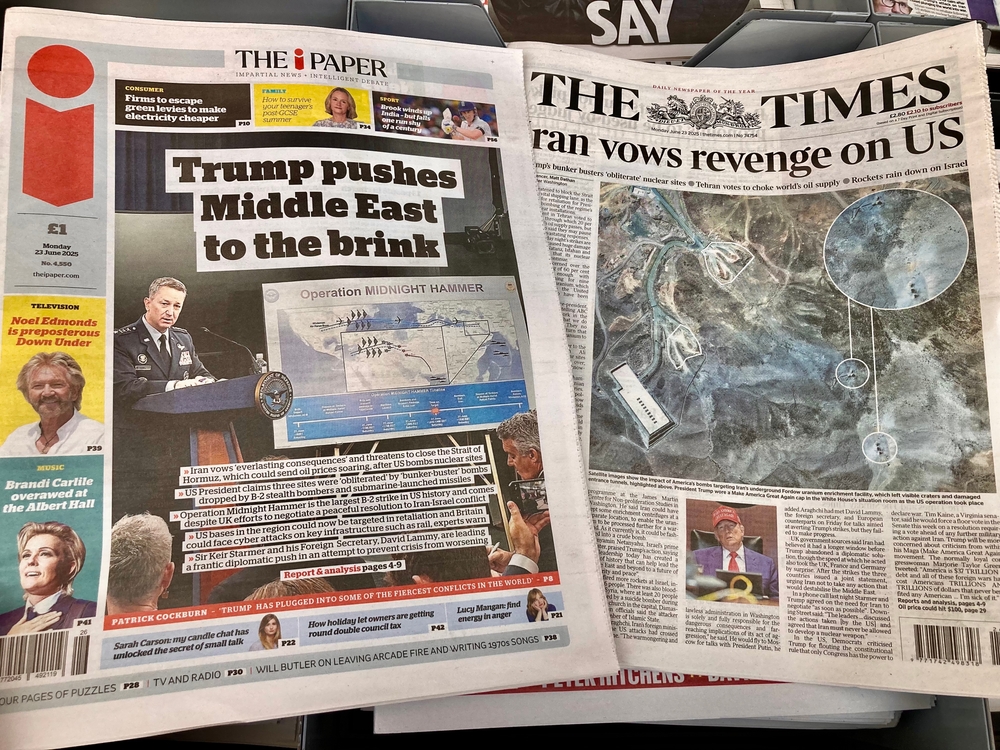


Heavy military losses have weakened Tehran’s conventional forces, but its missile arsenal and nuclear programme continue to give it bargaining power.
The formal commencement of bilateral negotiations between the United States and Iran under the newly signed Islamabad Memorandum of Understanding has shifted the focus of the international community from the battlefield to the diplomatic table.
While the massive combined air operations launched earlier this year severely dismantled the conventional infrastructure of the Islamic Republic, Tehran does not enter these talks empty-handed.
The strategic survival of the regime depends heavily on its remaining military capabilities, which serve as its primary leverage against American pressure. Understanding the precise composition of this residual arsenal is essential for contextualising why Washington is pursuing a diplomatic settlement rather than demanding unconditional capitulation from a wounded adversary.
The most acute point of leverage for Iranian negotiators resides within its heavily fortified and highly advanced nuclear programme. Recent assessments indicate that despite intense targeted strikes on primary enrichment facilities, the state still holds more than four hundred kilograms of highly enriched uranium refined to sixty per cent purity.
This volume places the country within mere steps of possessing weapon-grade material, a technical threshold that cannot be easily erased by physical bombardment. Furthermore, the domestic leadership has resolutely barred international inspectors from accessing damaged nuclear production facilities, effectively using this lack of transparency as a strategic shield. The research community believes that the survival of foundational engineering expertise and the rapid reconstruction of underground centrifuge assembly nodes mean that Tehran can reactivate its full fuel cycle at a moment of its choosing if negotiations break down.
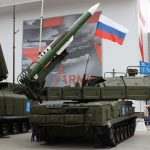
In tandem with its atomic ambitions, the primary deterrent against renewed Western intervention remains a highly resilient ballistic missile and uncrewed aerial vehicle architecture. Military planners increasingly believe that while the initial waves of regional conflict depleted a notable portion of the prewar inventory, Iran still commands between fifteen hundred and two thousand operational ballistic missiles.
These mobile systems are capable of striking commercial hubs and military installations across the Middle East with high precision. Although the domestic drone fleet was significantly reduced during the spring exchanges, the industrial production base remains largely intact. According to media reports, local manufacturing lines have rapidly adapted by rolling out new jet-powered loitering munitions and upgrading medium-range platforms, demonstrating an internal capacity to produce hundreds of tactical weapons per month without relying on immediate external supply lines.
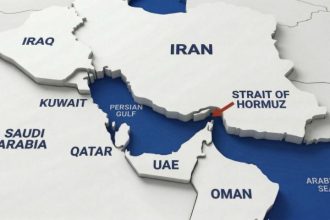
While the conventional surface fleet of the regime suffered catastrophic losses that left major military shipyards partially blocked by sunken vessels, its asymmetric naval doctrine continues to pose a severe threat to global markets. The geography of the Strait of Hormuz allows the paramilitary naval wings of the state to wield immense disruptive power through the deployment of naval mines, rapid attack craft, and shore-based anti-ship missiles.
Regional observers note that this disruptive capacity was a primary driver for the current ceasefire, as the prolonged closure of critical maritime choke points had begun to trigger an acute global energy and food crisis. By pairing this maritime threat with its surviving networks of regional non-state actors, who are explicitly shielded under the current truce framework, Tehran maintains a defensive perimeter that prevents its neighbours from capitalising on its current military weaknesses.
Looking ahead, the next sixty-day window will serve as a critical crucible for the future of Middle Eastern security as both sides attempt to formalise a permanent treaty. Decision makers warn that if Washington concludes that Tehran is merely exploiting the current diplomatic window to reconstitute its depleted conventional forces through alternative transhipment routes, the United States will quickly abandon diplomacy in favour of renewed military action. Western officials argue that any lasting agreement will require verifiable Iranian concessions on long-term nuclear enrichment and regional missile proliferation.
The ultimate factor to watch will be whether the economic relief offered by the unfreezing of tens of billions of dollars in hard currency can successfully incentivise the new leadership in Tehran to dismantle its residual strategic leverage, or if the region is simply experiencing a temporary pause before an even larger confrontation.