




The planned talks signal an unusual shift from battlefield confrontation to structured military communication, raising questions over legality, strategy, and Washington’s evolving Iran policy.
In a striking and unexpected development, US Vice President JD Vance has confirmed that officials from US Central Command (CENTCOM) will meet representatives of Iran’s Islamic Revolutionary Guard Corps (IRGC) in Doha, Qatar, as part of an effort to establish a direct channel for de-escalating tensions between the two adversaries.
Speaking in an interview with Unherd, Vance said the aim of the initiative is to create a structured mechanism to manage and reduce conflict. “One of the things we wanted to come out with was a channel on the Iranian side for reducing conflict,” he said, adding that both sides had agreed in principle to send representatives to Doha for talks.
The announcement marks a rare moment of direct military-to-military engagement between Washington and Tehran at a time when relations remain deeply strained following years of confrontation, covert operations, and recent joint US-Israeli military activity targeting Iranian security infrastructure.
A shift from confrontation to containment
The decision to involve CENTCOM directly is notable not only for its symbolism, but for what it suggests about the changing architecture of US-Iran crisis management.
Traditionally, sensitive engagement with adversarial states—particularly those involving intelligence or security services—has been handled through diplomatic or intelligence channels, most commonly the State Department or the CIA. The CIA, in particular, has historically served as Washington’s preferred interlocutor in discreet negotiations with hostile intelligence agencies, including during Cold War-era engagements with the Soviet KGB and later Russia’s FSB.
CENTCOM’s public role in such discussions therefore represents a departure from established practice. Military channels are typically used for deconfliction in conflict zones, not for broader political or strategic negotiation frameworks.
A fragile and legally complex channel
The IRGC is designated by US law as a foreign terrorist organisation, adding a layer of legal and political sensitivity to the planned meeting. Any formalised interaction between CENTCOM and the IRGC could therefore raise questions in Washington over the scope of military authority and congressional oversight.
Analysts also note the institutional asymmetry between the two sides. The IRGC is not only a military force but also a powerful intelligence and economic actor within Iran’s political system. CENTCOM, by contrast, operates as a conventional military command structure with a mandate focused on operational security and regional stability rather than intelligence diplomacy.
This mismatch underscores why such engagement has historically been handled through indirect or covert channels rather than publicly acknowledged military dialogue.
Why CENTCOM, and why now?
The choice of CENTCOM appears to reflect both practical and political calculations. The initiative comes in the wake of intensified regional tensions and recent military escalation involving Iran, Israel, and US forces in the broader Middle East theatre.
By establishing a direct communication channel, Washington may be seeking to reduce the risk of miscalculation in a highly volatile environment where rapid escalation remains a persistent concern.
US officials have previously engaged Iranian counterparts in limited formats involving military coordination, particularly around maritime security and deconfliction in the Gulf. However, those interactions have generally been mediated through civilian diplomatic actors rather than uniformed military leadership.
The current initiative therefore suggests a shift toward institutionalising crisis management at the military level, potentially reflecting concerns in Washington that diplomatic channels alone are insufficient to manage fast-moving regional flashpoints.
Qatar’s role as diplomatic intermediary
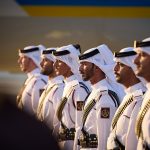
Doha’s selection as the venue is consistent with its longstanding role as an intermediary between Western powers and regional actors with limited formal relations. Qatar has previously hosted negotiations involving the United States, Iran, and non-state actors, leveraging its position as one of the few regional states maintaining open channels across multiple geopolitical divides.
The move also aligns with broader Gulf efforts to stabilise relations with Iran following years of tension over maritime security, proxy conflicts, and nuclear negotiations.
Strategic implications and institutional risks
While the initiative may be intended as a de-escalation mechanism, it also introduces institutional and strategic risks. Critics are likely to question whether military-led engagement could blur lines between operational coordination and political negotiation, particularly given the IRGC’s dual role as a security and political force within Iran.
Others argue that direct military communication may in fact reduce the risk of unintended escalation by providing faster and more reliable channels during crises.
Former intelligence and defence officials have long debated the merits of military-to-military engagement with adversarial states, particularly in contexts where civilian diplomatic processes are slow or politically constrained.
A cautious recalibration
The planned meeting does not signal a broader normalisation of US-Iran relations. Instead, it reflects a narrow but significant attempt to institutionalise crisis communication in an environment where traditional diplomatic frameworks have repeatedly failed to prevent escalation.
Whether the initiative develops into a durable channel or remains an isolated experiment will depend on both political conditions in Washington and Tehran’s willingness to sustain engagement at the military level.
For now, the announcement underscores a broader reality shaping US policy in the Middle East: as confrontation and deterrence coexist, so too must mechanisms for managing the risks between them.