




A postponed US–Iran meeting in Switzerland exposes the fragility of an emerging ceasefire framework that is already being strained by continued Israeli–Hezbollah fighting, divergent interpretations of the agreement, and the absence of credible enforcement mechanisms.
- A deal ahead of implementation: diplomacy without sequencing discipline
- Competing interpretations: Washington, Tehran, and Jerusalem diverge
- Lebanon as the pressure valve of regional escalation
- The erosion of enforceable diplomacy
- Regional and international implications: fragmentation of escalation control
- Policy outlook: three trajectories over the next 60 days
- Diplomacy under fire
The postponement of planned US–Iran technical talks in Switzerland marks an early stress test for a hastily constructed diplomatic framework that was intended to stabilise multiple overlapping conflicts across the Middle East. The White House decision to delay Vice-President JD Vance’s participation, citing logistical uncertainty, comes only days after Washington and Tehran announced a broad 14-point memorandum aimed at de-escalating hostilities, reopening strategic waterways, and laying the groundwork for a longer-term settlement.
Yet even before negotiators could meet, the agreement has been overtaken by events on the ground. Israeli strikes in southern Lebanon killed at least 18 people overnight, according to Lebanese health authorities, while Hezbollah-linked media reported that the talks themselves had already been disrupted by ongoing military operations. Israel says its forces targeted Hezbollah infrastructure, while also acknowledging the deaths of four soldiers in border fighting.
What emerges is not the consolidation of a ceasefire architecture, but a familiar pattern in Middle East diplomacy: ambitious political agreements colliding with fragmented command structures, divergent threat perceptions, and actors who continue to treat military escalation as a bargaining tool rather than a violation of the diplomatic process.
A deal ahead of implementation: diplomacy without sequencing discipline
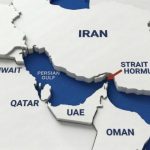
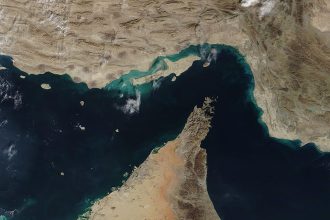
At the centre of the current uncertainty is the structure of the US–Iran memorandum itself. Framed around 14 points, the agreement reportedly includes commitments to reopen the Strait of Hormuz, prevent Iran from acquiring nuclear weapons capability, initiate sanctions relief, and establish a $300 billion reconstruction framework for Iran. It also sets an ambitious 60-day timeline for reaching a more comprehensive settlement.
On paper, the package resembles a classic “grand bargain” attempt: economic incentives in exchange for strategic restraint. In practice, however, it suffers from a sequencing problem that has historically undermined similar efforts in the region. The deal appears to have prioritised political signalling over enforcement design, leaving critical questions unresolved about verification, compliance monitoring, and the linkage between regional ceasefires and nuclear negotiations.
The postponement of technical talks underscores this gap. Without the granular diplomacy required to translate broad commitments into operational mechanisms, the agreement risks becoming a declaratory framework rather than a functional one.
More importantly, the timing of the deal signed amid ongoing Israeli-Hezbollah exchanges and incomplete battlefield de-escalation has exposed a structural weakness: diplomacy is attempting to freeze a conflict that remains actively evolving on multiple fronts.
Competing interpretations: Washington, Tehran, and Jerusalem diverge
Each of the key actors is now interpreting the agreement through fundamentally different strategic lenses.
For Washington, the memorandum appears to represent an opportunity to contain escalation across multiple theatres simultaneously: Iran’s nuclear programme, maritime security in the Gulf, and the Israel-Hezbollah front in Lebanon. The emphasis on “technical discussions” suggests an attempt to move quickly from political announcement to implementation, but the postponement signals internal uncertainty about readiness and coherence.
Tehran’s position, as articulated by Supreme Leader Mojtaba Khamenei, reflects a more conditional acceptance. His remarks emphasising that engagement “does not mean acceptance of the enemy’s position” point to an internal balancing act: preserving regime legitimacy while extracting economic relief under pressure. Iran’s strategic priority remains sanctions relief and regional deterrence preservation, rather than full strategic realignment.
Israel, meanwhile, appears increasingly disconnected from the diplomatic track. The continuation of strikes in Lebanon and the explicit rejection by far-right ministers of any constraint on military operations highlight a divergence between US-led diplomatic sequencing and Israeli operational doctrine. The rhetoric from Itamar Ben-Gvir—calling for Lebanon to “burn”—illustrates the political pressures shaping Israeli escalation dynamics, particularly in the context of domestic security losses.
This divergence creates a triangular misalignment: Washington seeks stabilisation, Tehran seeks conditional relief without strategic capitulation, and Israel continues to prioritise kinetic deterrence against Hezbollah irrespective of diplomatic timelines.
Lebanon as the pressure valve of regional escalation
Lebanon has once again emerged as the primary geographic theatre through which broader regional tensions are being expressed. The reported killing of at least 18 people in southern Lebanon, alongside continued Israeli strikes targeting Hezbollah infrastructure, underscores the intensity of the conflict despite the announcement of a wider ceasefire framework.
Lebanon’s health ministry reports that the cumulative death toll since the conflict escalated exceeds 3,900, including civilians, while Israeli authorities report both military and civilian casualties on their side of the border. These figures, while difficult to independently verify in real time, reflect a sustained pattern of attritional warfare rather than controlled escalation.
Hezbollah’s role remains central but opaque. As both a domestic political actor and an Iranian-aligned military organisation, it operates in a grey zone between state and non-state warfare. This ambiguity complicates any ceasefire enforcement mechanism: even if Tehran signals restraint, Hezbollah’s operational autonomy and its embeddedness in Lebanese political structures limit external control.
The result is a system in which ceasefire diplomacy at the interstate level is continuously undermined by sub-state actors whose incentives are shaped by local battlefield dynamics rather than international agreements.
The erosion of enforceable diplomacy
The most significant structural issue revealed by the postponement of talks is not procedural delay, but the absence of credible enforcement architecture behind the agreement.
The memorandum’s ambitious scope covering maritime security, sanctions relief, nuclear restrictions, and regional ceasefires stands in contrast to the lack of institutional mechanisms capable of ensuring compliance across such diverse domains. There is no clearly defined verification body, no unified monitoring mission for Lebanon, and no enforcement mechanism capable of restraining Israeli or Hezbollah military actions in real time.
Historically, durable agreements in the region have required either overwhelming external enforcement capacity or tightly limited objectives. This framework attempts neither. Instead, it relies on simultaneous goodwill from multiple adversaries whose strategic incentives remain misaligned.
The postponement of the Switzerland talks therefore reflects more than logistical delay; it signals the fragility of a diplomatic process that is attempting to operate ahead of battlefield stabilisation rather than after it.
Regional and international implications: fragmentation of escalation control
The broader implication of the current trajectory is the fragmentation of escalation control across the Middle East.
If the US–Iran framework collapses or stalls, it risks reinforcing a pattern in which regional conflicts are managed episodically rather than resolved structurally. This would leave the Israel–Hezbollah front, maritime security in the Gulf, and Iran’s nuclear trajectory as interconnected but independently volatile crises.
For European states, particularly those reliant on Gulf energy flows and Mediterranean stability, the reopening of the Strait of Hormuz clause is particularly significant. Any disruption to implementation could reintroduce uncertainty into global energy markets, even in the absence of full-scale war.
For international institutions, the situation highlights a persistent limitation: diplomatic agreements are increasingly negotiated at speed in response to crisis, but lack the institutional depth required for sustained enforcement.
Policy outlook: three trajectories over the next 60 days
Three scenarios now emerge over the short term.
The first is managed revival, in which technical talks resume quickly and incremental confidence-building measures stabilise the Israel–Hezbollah front enough to allow implementation of the memorandum’s initial phases.
The second is selective breakdown, in which US–Iran talks proceed but the Lebanon theatre remains unstable, effectively decoupling diplomatic progress from battlefield realities.
The third and increasingly plausible scenario is parallel escalation and negotiation, where diplomatic engagement continues rhetorically while military activity persists in Lebanon, eroding trust and delaying substantive implementation beyond the 60-day window.
Key indicators will include whether Israel moderates its operational tempo, whether Hezbollah escalates rocket activity in response, and whether Washington can re-establish a credible sequencing framework that links ceasefire compliance to diplomatic progress.
Diplomacy under fire
The postponement of US–Iran talks in Switzerland is not simply a scheduling setback; it is an early indicator of the structural fragility underpinning the current diplomatic architecture in the Middle East. The agreement’s ambition far exceeds its enforcement capacity, while its implementation is already being tested by actors who remain committed to military pressure as a parallel instrument of statecraft.
What is unfolding is a familiar but increasingly unstable pattern: diplomacy that seeks to outrun conflict rather than contain it. Without clearer sequencing, credible enforcement mechanisms, and alignment between regional actors, the current framework risks becoming another entry in a long list of ambitious but transient Middle Eastern agreements announced in moments of urgency, and eroded in the slow logic of war.