



The reported tentative ceasefire between the United States and Iran, brokered with Pakistani mediation, marks a rare but fragile pause in a conflict that has steadily expanded across the Middle East’s maritime and proxy theatres. The framework, which reportedly includes a halt to hostilities and steps toward reopening the Strait of Hormuz, has been welcomed by some international actors as a potential stabilising moment.
Yet for policymakers, the significance lies less in the announcement itself than in what it reveals: a confrontation that has become structurally embedded in regional politics and global energy security.
At its core, the agreement reflects tactical exhaustion rather than strategic convergence. Both Washington and Tehran have strong incentives to avoid uncontrolled escalation. For the United States, continued instability in the Gulf risks triggering energy price shocks and wider economic disruption at a time of already fragile global growth. For Iran, sustained confrontation threatens domestic stability and complicates its ability to maintain influence across its regional network of partners and proxies. The ceasefire, therefore, is best understood as a managed pause rather than a political breakthrough.
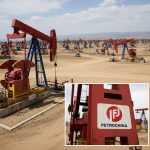
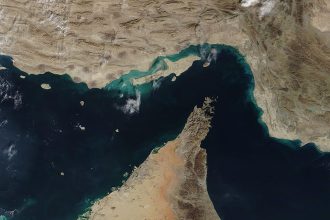
The focus on the Strait of Hormuz underscores why even limited de-escalation carries global weight. The waterway remains one of the world’s most critical energy corridors, carrying a significant share of global oil shipments. Any disruption—whether through naval confrontation, sabotage, or escalation involving proxy forces—has immediate consequences for global markets. Iran’s historical use of maritime pressure as a bargaining tool highlights the strategic asymmetry at the heart of the conflict: Tehran does not need to control the Strait to influence it, only to threaten its stability.
However, the ceasefire does not resolve the central structural dispute between Washington and Tehran: the nuclear issue. The reported inclusion of a 60-day window for broader negotiations reflects an attempt to separate immediate de-escalation from longer-term strategic questions, but this sequencing remains inherently unstable. The United States continues to prioritise preventing Iran from achieving nuclear breakout capability, while Tehran views its nuclear programme as both a deterrent asset and a symbol of sovereignty under sustained sanctions pressure. This divergence ensures that even if maritime tensions ease, the risk of renewed escalation remains embedded in the system.
The mediation role played by Pakistan reflects a broader shift in crisis diplomacy across the Middle East. Traditional Western-led negotiation frameworks are increasingly supplemented—or replaced—by regional intermediaries capable of maintaining communication channels with multiple sides. For Islamabad, involvement provides diplomatic leverage and regional relevance; for Iran, it offers an indirect channel that bypasses direct confrontation with Washington; and for the United States, it reduces immediate political exposure while preserving negotiation flexibility. This diffusion of mediation authority points to a more fragmented diplomatic environment in which agreements are easier to broker but harder to sustain.
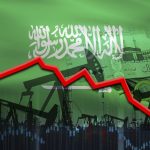
Beyond the immediate parties, the implications extend to global energy markets and the wider international system. Even partial stabilisation in the Gulf could ease short-term price volatility and reduce risk premiums in shipping and insurance markets. However, the absence of a comprehensive settlement means that markets remain highly sensitive to renewed escalation. The structural uncertainty itself becomes a form of persistent risk, shaping investment decisions and geopolitical calculations across multiple regions.
At the institutional level, the episode also highlights the diminishing centrality of multilateral mechanisms in managing high-intensity regional crises. Neither the United Nations nor traditional alliance structures have played a decisive role in shaping the ceasefire framework, which has instead emerged through ad hoc diplomacy. This reflects a broader trend in which crisis management is increasingly decentralised, relying on overlapping regional and bilateral channels rather than unified global coordination.
Looking ahead, three broad trajectories are possible. The most optimistic scenario involves a managed de-escalation in which the ceasefire holds and negotiations gradually expand into nuclear and sanctions issues. A more likely outcome is cyclical instability, where temporary pauses in hostilities are repeatedly disrupted by proxy incidents or maritime tensions. A more ambitious but less probable scenario would involve a structured agreement linking nuclear constraints to phased sanctions relief—an outcome constrained by deep political mistrust on both sides.
Ultimately, the ceasefire should not be interpreted as a resolution but as a recalibration of an ongoing confrontation. The underlying drivers of conflict—competing regional visions, unresolved nuclear tensions, and the strategic centrality of the Strait of Hormuz—remain firmly in place. In that sense, the agreement does not mark the end of escalation, but rather a temporary suspension within a longer and more unpredictable cycle of rivalry.