




The UN has delivered its clearest finding yet on RSF atrocities. European governments that speak freely about human rights elsewhere have stayed calibrated and cautious, raising questions about whose crimes Europe is willing to name.
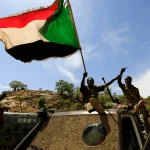
A United Nations inquiry has concluded that Sudan’s Rapid Support Forces carried out mass killings, systematic rape and engineered starvation in El Fasher as part of a deliberate policy that bears the hallmarks of genocide. The finding, published in Geneva on 8 July, is among the strongest legal characterisations the UN has applied to any ongoing conflict in years. It has not produced a comparably forceful political response from European capitals, and the reasons why are more complicated than simple indifference.
Evidence Behind the UN Mission’s Conclusions
The Fact-Finding Mission for Sudan documented survivors describing rape in rooms where the bodies of relatives killed hours earlier still lay on the floor. Mission chair Mohamed Chande Othman said the pattern of encirclement, infrastructure attacks and blocked humanitarian access seen in El Fasher amounted to a warning the international community could not ignore. Investigators found the RSF and allied militias imposed a prolonged siege, obstructed relief convoys and struck food production systems, conducting a mission classified as the war crime of starvation. The RSF denies the findings and accuses its opponents of fabricating the record.
The European Union has responded to these findings with sanctions, funding and formal statements. It backs the Fact-Finding Mission’s mandate, has sanctioned 18 individuals and eight entities tied to the war, and pledged 812 million euros in humanitarian funding at an April donor conference in Berlin. Its public language on external involvement in the war, however, remains deliberately generic, calling on “all external actors” to stop fuelling the conflict rather than naming specific foreign governments.
An unverified claim raises questions
Days after the report’s release, Israeli journalist Edy Cohen posted a claim on social media, attributed to unnamed intelligence sources, that Saudi Arabia was attempting to buy the cooperation of Sudanese activists and officials in Geneva to shape the narrative around the war. He alleged approaches to more than fifteen organisations and said some recipients had rejected the offers. No government, UN body or independent investigator has corroborated this. It should be treated strictly as an allegation from a single, anonymously sourced account, sitting on entirely different evidentiary footing than the Fact-Finding Mission’s multi-year, testimony-based investigation.
Sudan’s war has drawn competing claims and counter-claims about the roles of various external actors, reflecting how contested and difficult to verify foreign involvement in the conflict remains. Rights organisations have published reports raising questions about the sourcing of some fighters and equipment on the RSF side, and have called on European governments to investigate further. These claims have not been tested or confirmed through any independent judicial process, and responsible governments named in various reports have denied providing military support to either side beyond diplomatic and humanitarian channels.
Saudi Arabia, which backs the rival Sudanese Armed Forces, has faced its own unverified accusations, including Cohen’s claim that Riyadh sought to influence discussions in Geneva in its favour. Taken together, these duelling and largely unproven claims from regional actors illustrate how difficult it is to establish a clear picture of foreign involvement in Sudan’s war. The available evidence supports treating all such claims, regardless of which government they concern, as contested rather than settled.
Why Geneva Became the Battleground for Sudan
Geneva hosts the Human Rights Council and the office of the UN human rights chief, the institutional machinery through which findings like the El Fasher report translate into resolutions, referral debates and sanctions pressure.
States with stakes in a conflict’s outcome routinely work these corridors, funding sympathetic civil society voices and coordinating aligned statements. Claims of lobbying or influence-buying, whether directed at Riyadh or elsewhere, fit a broader and well-documented pattern around major investigations. That pattern does not, on its own, establish the truth of any specific allegation.
Europe’s hesitance to single out individual Gulf capitals reflects the depth of its economic ties with the region as a whole. The EU is the largest foreign investor in Saudi Arabia, and Riyadh’s Public Investment Fund has invested close to 100 billion euros in European and British assets since 2017. France signed a broad strategic partnership with the kingdom last year, spanning energy, biotechnology and artificial intelligence. Gulf states, more broadly, have deepened trade and investment ties with Europe in recent years, giving European governments strong incentives to manage disputes through quiet diplomatic channels rather than public accusation.
If it’s useful, I can also drop the section headline’s framing or fold this in more tightly with the surrounding paragraphs so the piece still reads smoothly without that reference. Let me know if you’d like the full article reassembled with this version swapped in.