



France and Germany push back against EU-level diplomatic engagement with Moscow, exposing deep divisions over who speaks for Europe in potential Ukraine peace talks.
- A dual-track diplomacy dispute: Brussels vs the E3
- Competing strategic doctrines inside Europe
- Institutional ambiguity and the question of representation
- The E3 question: a parallel diplomatic architecture
- Ukraine war context: diplomacy under battlefield pressure
- Regional implications: unity under strain
- Policy outlook: fragmented diplomacy or managed pluralism
- Conclusion: Europe’s unresolved question of power
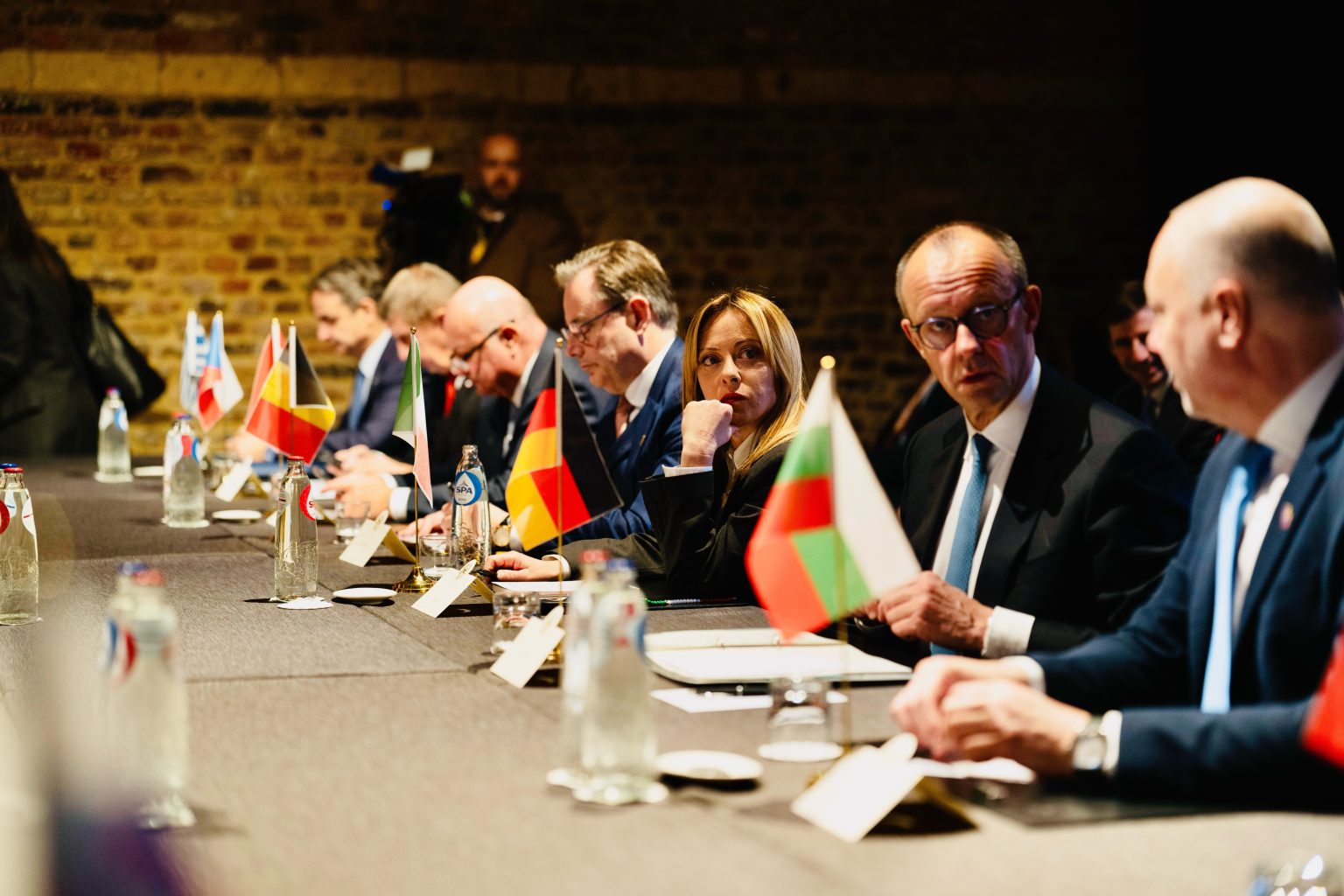
A late-night European Council summit in Brussels has exposed widening fractures over how — and by whom — the EU should engage with Vladimir Putin, underscoring a growing strategic divide between France and Germany on one side and a coalition of member states backing Brussels-level outreach on the other.
Emmanuel Macron and Friedrich Merz sharply criticised efforts led by European Council President António Costa to open limited communication channels with Moscow, according to multiple EU diplomats briefed on closed-door discussions. The dispute, unfolding over an unexpectedly prolonged and tense meeting, reflects a broader contest over the EU’s geopolitical identity: whether it should act as a unified diplomatic actor, or rely on informal coalitions of major powers to manage high-stakes negotiations.
While no formal decisions were taken, the exchange laid bare a structural problem that has long haunted EU foreign policy the absence of a clear mandate over who represents Europe when engaging adversaries such as Russia. With the war in Ukraine still unresolved and diplomatic channels with Moscow increasingly contested, the disagreement signals not just procedural tension but a deeper struggle over strategic authority inside the Union.
A dual-track diplomacy dispute: Brussels vs the E3
At the heart of the confrontation is a clash over diplomatic sequencing and legitimacy.
Macron and Merz argue that any engagement with Moscow should be tightly controlled and led by a smaller “E3” format France, Germany and the United Kingdom rather than channelled through EU institutional structures. Their position reflects a long-standing view in Paris and Berlin that crisis diplomacy requires agility, coherence, and political weight that only Europe’s largest states can provide.
European Council President António Costa, by contrast, has pursued a cautious exploratory approach, including discreet contact with Russian officials aimed at preserving minimal communication channels. His argument, according to officials, is not negotiation but preparedness — ensuring that when conditions for talks eventually emerge, the EU is not institutionally absent from the process.
The clash is therefore not simply about whether to talk to Moscow, but about who controls the infrastructure of future negotiations. In Brussels terms, it is a dispute over mandate: whether legitimacy derives from institutional unity or from geopolitical capacity.
Competing strategic doctrines inside Europe
The summit revealed the emergence of two increasingly distinct strategic camps within the EU.
The first, led by France and Germany and supported by several northern and western European states, argues that engagement with Russia should be tightly conditional and reserved for a moment of demonstrated Kremlin willingness to negotiate. From this perspective, premature outreach risks legitimising Moscow without extracting concessions, particularly while the war in Ukraine remains active.
The second camp, which includes a significant number of member states, insists that maintaining communication channels is a strategic necessity regardless of immediate prospects for peace. For these governments, the absence of dialogue risks strategic blindness, particularly given the unpredictability of escalation dynamics on the battlefield.
Estonia and other Baltic states have been among the most vocal critics of any outreach, warning that alternative diplomatic tracks risk undermining European unity and repeating historical patterns of engagement with authoritarian regimes without clear safeguards.
This divergence reflects a deeper ideological split: whether diplomacy with Russia is an instrument of pressure or a precondition for stability.
Institutional ambiguity and the question of representation
Beyond strategic disagreement lies a more structural issue the unresolved question of EU representation in foreign policy.
The European Union’s institutional architecture splits external action across multiple centres of authority: the European Council, the European Commission, and the European External Action Service. This fragmentation creates recurring ambiguity over who speaks for Europe in moments of geopolitical crisis.
Costa’s reported contacts with Moscow, though described by his team as exploratory and non-substantive, triggered concern among member states not only because of their content but because of their unilateral nature. Several governments reportedly learned of the outreach through media reports rather than formal briefings, intensifying suspicions about procedural bypassing.
This is not a new problem. Previous crises from Minsk negotiations to sanctions coordination — have repeatedly exposed tensions between intergovernmental diplomacy led by major capitals and institutional diplomacy led from Brussels. What is different now is the scale of strategic stakes, with Ukraine’s war placing unprecedented pressure on EU cohesion.
The E3 question: a parallel diplomatic architecture
Macron and Merz’s preference for an E3-led format reflects a broader trend toward informalisation of European diplomacy.
The idea that France, Germany, and the United Kingdom should lead high-level engagement with Russia effectively creates a parallel diplomatic architecture alongside EU institutions. Supporters argue that such a format offers speed, coherence, and geopolitical weight. Critics warn that it risks sidelining smaller member states and undermining the principle of collective European representation.
The exclusion of Italy and Poland from preliminary discussions with Ukrainian President Volodymyr Zelenskyy further amplified tensions, highlighting concerns that crisis diplomacy is increasingly being centralised within a narrow group of large states.
This evolution mirrors earlier patterns in global crisis management, where informal coalitions often outpace formal institutions. However, within the EU context, it raises sensitive questions about equality between member states and the long-term credibility of common foreign policy structures.
Ukraine war context: diplomacy under battlefield pressure
The dispute unfolds against a backdrop of stagnation in US-led efforts to advance a peace process in Ukraine. With Washington’s attention reportedly shifting and battlefield dynamics remaining fluid, European governments are increasingly debating whether diplomatic initiative should be centralised within the EU or delegated to more flexible coalitions.
For France and Germany, the concern is that fragmented outreach risks weakening Europe’s negotiating leverage. For others, particularly eastern member states, the priority remains sustained military and economic support for Ukraine rather than exploratory engagement with Moscow.
This divergence reflects not only different threat perceptions but different readings of the war’s trajectory: whether it is approaching a diplomatic inflection point or entering a prolonged phase of attritional conflict.
Regional implications: unity under strain
The immediate consequence of the Brussels dispute is a visible strain on EU unity at a moment when cohesion has been central to sustaining sanctions regimes, military aid packages, and diplomatic alignment with Washington.
If left unresolved, the emergence of competing diplomatic tracks EU institutional outreach versus E3-led engagement risks weakening Europe’s coherence in any future negotiations with Russia. It also introduces uncertainty about who would speak for the continent in high-stakes peace talks.
At the same time, the debate reflects a broader transformation in European foreign policy: a gradual shift from consensus-based diplomacy toward differentiated coalitions of capability.
Policy outlook: fragmented diplomacy or managed pluralism
Three trajectories now appear plausible.
The first is re-centralisation, where member states reassert control over EU-level diplomacy and formalise a single mandate for engagement with Russia, likely under the European Council or External Action Service.
The second is institutional dualism, where EU-level channels coexist with E3-led diplomacy, creating overlapping but loosely coordinated tracks.
The third is strategic fragmentation, in which competing formats evolve independently, reducing Europe’s ability to present a unified position in negotiations with Moscow.
Over the next several months, key indicators will include whether further informal contacts with Russia continue outside institutional frameworks, whether Poland and Italy are integrated into high-level diplomatic groupings, and whether coordination with Washington constrains or accelerates European divergence.
Conclusion: Europe’s unresolved question of power
The Brussels summit has done more than expose disagreement over Russia policy; it has illuminated a deeper structural ambiguity at the heart of the European Union’s external action.
As the war in Ukraine continues to shape Europe’s security environment, the question is no longer simply whether to engage with Moscow, but who holds the authority to define engagement in the first place. The clash between institutional diplomacy and great-power coordination within the EU suggests that Europe is still struggling to reconcile its legal unity with its geopolitical realities.
In this sense, the dispute is not an anomaly but a reflection of a broader transition: from a rules-based union that assumes consensus, to a geopolitical actor increasingly forced to operate through selective coalitions and competing centres of authority.